Free lesson · Anatomy · Upper limb
Upper-limb nerve injuries: the map in one lesson
Four nerves, four places on the bone, four signs. Tie each nerve to its place on the bone and the injury question becomes one of logic, not memory.
By the Medix team
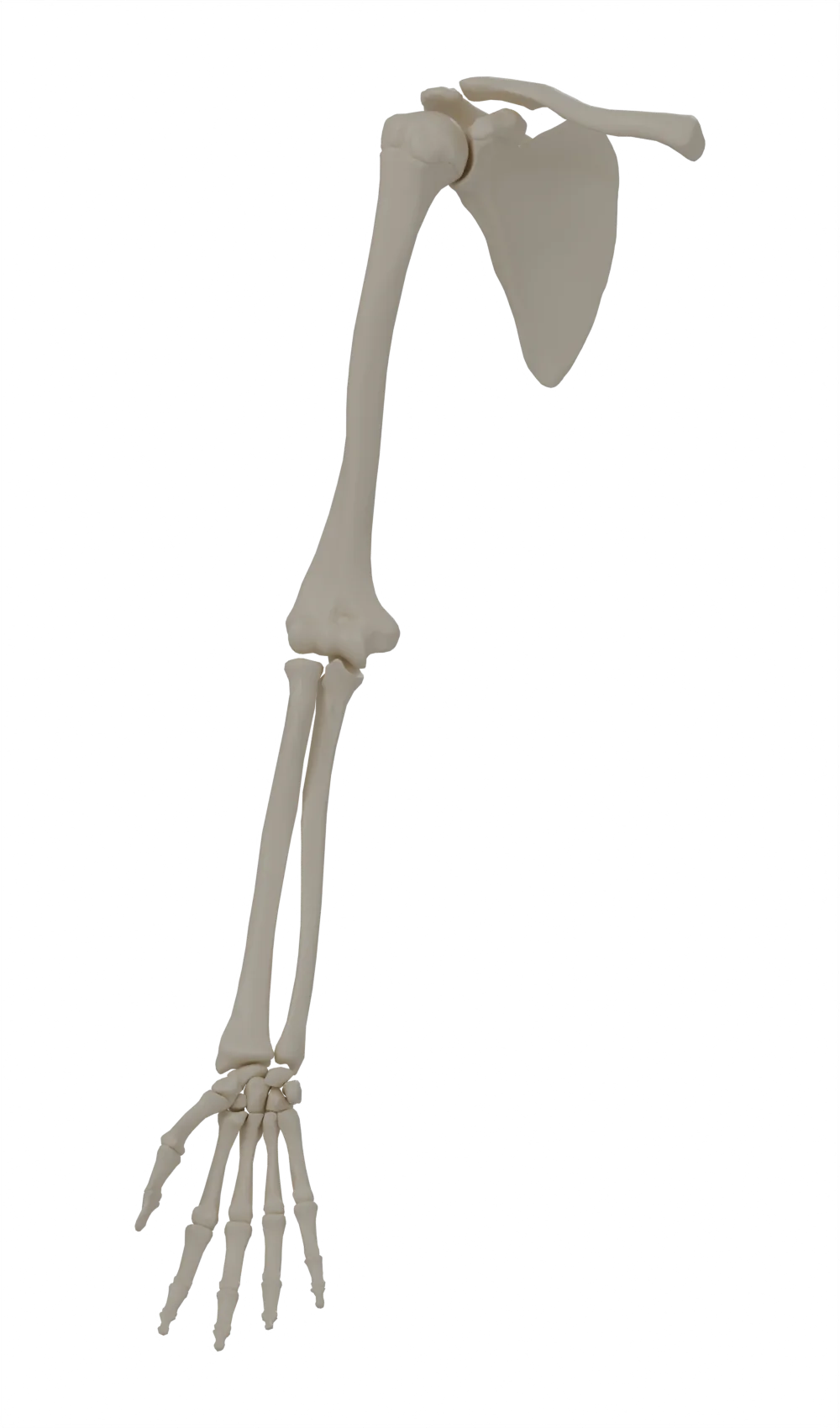
Axillary nerve
C5–C6-
01Map · Where it is, what it relates to
Winds around the surgical neck of the humerus with the posterior circumflex humeral artery, after passing through the quadrangular space.
-
02Function · What it does
Supplies deltoid and teres minor, and the skin over the lower deltoid.
-
03Lesion · What you see when it is injured
Surgical-neck fracture or anterior shoulder dislocation: weak arm abduction, a flattened shoulder contour and a numb patch over the deltoid.
-
04Question · How it appears in the exam
After an anterior shoulder dislocation a patient cannot abduct the arm and has numbness over the deltoid. Which nerve?
Reveal the answer
The axillary nerve
Radial nerve
C5–T1-
01Map · Where it is, what it relates to
Runs in the radial (spiral) groove on the back of the humeral shaft with the profunda brachii artery.
-
02Function · What it does
Supplies the extensors of the elbow, wrist and fingers, and the skin over the dorsum of the hand at the base of the thumb.
-
03Lesion · What you see when it is injured
Mid-shaft humeral fracture: wrist drop and numbness over the back of the hand. Triceps is usually spared because its branches leave above the groove.
-
04Question · How it appears in the exam
A patient with a mid-shaft humeral fracture cannot extend the wrist. Which nerve is injured?
Reveal the answer
The radial nerve
Ulnar nerve
C8–T1-
01Map · Where it is, what it relates to
Passes behind the medial epicondyle of the humerus in the cubital tunnel: the “funny bone”.
-
02Function · What it does
Supplies most of the small muscles of the hand, and the skin of the little finger and half the ring finger.
-
03Lesion · What you see when it is injured
Medial epicondyle fracture: weak finger abduction and adduction, and a numb little finger. Clawing of the ring and little fingers is usually more marked when the injury is at the wrist than at the elbow (the “ulnar paradox”).
-
04Question · How it appears in the exam
After a medial epicondyle fracture a patient cannot grip a card between the fingers and has a numb little finger. Which nerve?
Reveal the answer
The ulnar nerve
Median nerve
C5–T1-
01Map · Where it is, what it relates to
Crosses the wrist inside the carpal tunnel, under the flexor retinaculum, with the long flexor tendons.
-
02Function · What it does
Supplies most forearm flexors and the thenar muscles, and the palmar skin of the thumb, index, middle and half the ring finger.
-
03Lesion · What you see when it is injured
Carpal tunnel syndrome: tingling in the lateral three and a half fingers that is worse at night, weak thumb opposition and thenar wasting.
-
04Question · How it appears in the exam
Tingling in the thumb, index and middle fingers wakes a patient at night, with weak thumb opposition. Which nerve, and where?
Reveal the answer
The median nerve, in the carpal tunnel
01 · C5–C6
Axillary nerve
At risk: Surgical neck of the humerus
- Map
- Winds around the surgical neck of the humerus with the posterior circumflex humeral artery, after passing through the quadrangular space.
- Function
- Supplies deltoid and teres minor, and the skin over the lower deltoid.
- Lesion
- Surgical-neck fracture or anterior shoulder dislocation: weak arm abduction, a flattened shoulder contour and a numb patch over the deltoid.
Question: After an anterior shoulder dislocation a patient cannot abduct the arm and has numbness over the deltoid. Which nerve?
The axillary nerve
02 · C5–T1
Radial nerve
At risk: Mid-shaft humerus (radial groove)
- Map
- Runs in the radial (spiral) groove on the back of the humeral shaft with the profunda brachii artery.
- Function
- Supplies the extensors of the elbow, wrist and fingers, and the skin over the dorsum of the hand at the base of the thumb.
- Lesion
- Mid-shaft humeral fracture: wrist drop and numbness over the back of the hand. Triceps is usually spared because its branches leave above the groove.
Question: A patient with a mid-shaft humeral fracture cannot extend the wrist. Which nerve is injured?
The radial nerve
03 · C8–T1
Ulnar nerve
At risk: Behind the medial epicondyle
- Map
- Passes behind the medial epicondyle of the humerus in the cubital tunnel: the “funny bone”.
- Function
- Supplies most of the small muscles of the hand, and the skin of the little finger and half the ring finger.
- Lesion
- Medial epicondyle fracture: weak finger abduction and adduction, and a numb little finger. Clawing of the ring and little fingers is usually more marked when the injury is at the wrist than at the elbow (the “ulnar paradox”).
Question: After a medial epicondyle fracture a patient cannot grip a card between the fingers and has a numb little finger. Which nerve?
The ulnar nerve
04 · C5–T1
Median nerve
At risk: The carpal tunnel
- Map
- Crosses the wrist inside the carpal tunnel, under the flexor retinaculum, with the long flexor tendons.
- Function
- Supplies most forearm flexors and the thenar muscles, and the palmar skin of the thumb, index, middle and half the ring finger.
- Lesion
- Carpal tunnel syndrome: tingling in the lateral three and a half fingers that is worse at night, weak thumb opposition and thenar wasting.
Question: Tingling in the thumb, index and middle fingers wakes a patient at night, with weak thumb opposition. Which nerve, and where?
The median nerve, in the carpal tunnel
One line per nerve
- Axillary nerve Surgical neck of the humerus Numb “regimental badge” area
- Radial nerve Mid-shaft humerus (radial groove) Wrist drop
- Ulnar nerve Behind the medial epicondyle Weak finger adduction · numb little finger
- Median nerve The carpal tunnel Thenar wasting
Simplified educational material for medical students; no substitute for your university references or clinical judgment. Disclaimer
Next